Operating resources
No successful business without operating resources. Who hasn’t heard this saying?! But that is easier said than done, because not everyone knows what they actually are. High time to change that. Craftcloud explains the “operating resources” myth in the trades from A to Z.
What are operating resources in the trades?
The basic factors of production in the economy are capital, land and labour. Operating resources are part of a company’s capital and therefore an essential factor of production. In the trades, operating resources can also be called work equipment. Without them, a company would be lost. Whether in the form of machines, systems or new media – they give production a boost, directly or indirectly. Only with their active support is smooth everyday work possible at all. It is no coincidence that operating resources are also called the engine of the business.
What is special about operating resources: they support production but are not used up in the process. So they are involved in the production process indirectly. With raw materials and supplies it is exactly the other way round. They are used up in production, so they are directly involved in the production process.
An example: without the warehouse and production hall of a painting business, daily business would not be possible. Where else would it carry out its work?
Unlike raw materials such as metal, plastic and concrete, or supplies such as oil or lubricants, operating resources are made to last. They often serve the business faithfully for many years. How long they are used depends on two decisive factors:
- suitability: does the equipment meet the requirements for manufacturing products or articles?
- condition: how old is the equipment? And what about its degree of wear or its performance?
What types of work equipment are there in the trades?
In principle we distinguish two types of operating resources in the trades – intangible and tangible. With intangible operating resources the name says it all: they are not something material, not something you can touch. Information and knowledge are also intangible operating resources. With tangible operating resources the opposite is the case. Here we have something concrete – something we can touch and see.
Tangible vs. intangible operating resources in the trades
Tangible operating resources in the trades are items such as:
- vehicles (e.g. company cars, forklifts, loaders, vans)
- land and buildings (e.g. production halls, offices, storage facilities)
- machines (e.g. drills, lathes, milling machines)
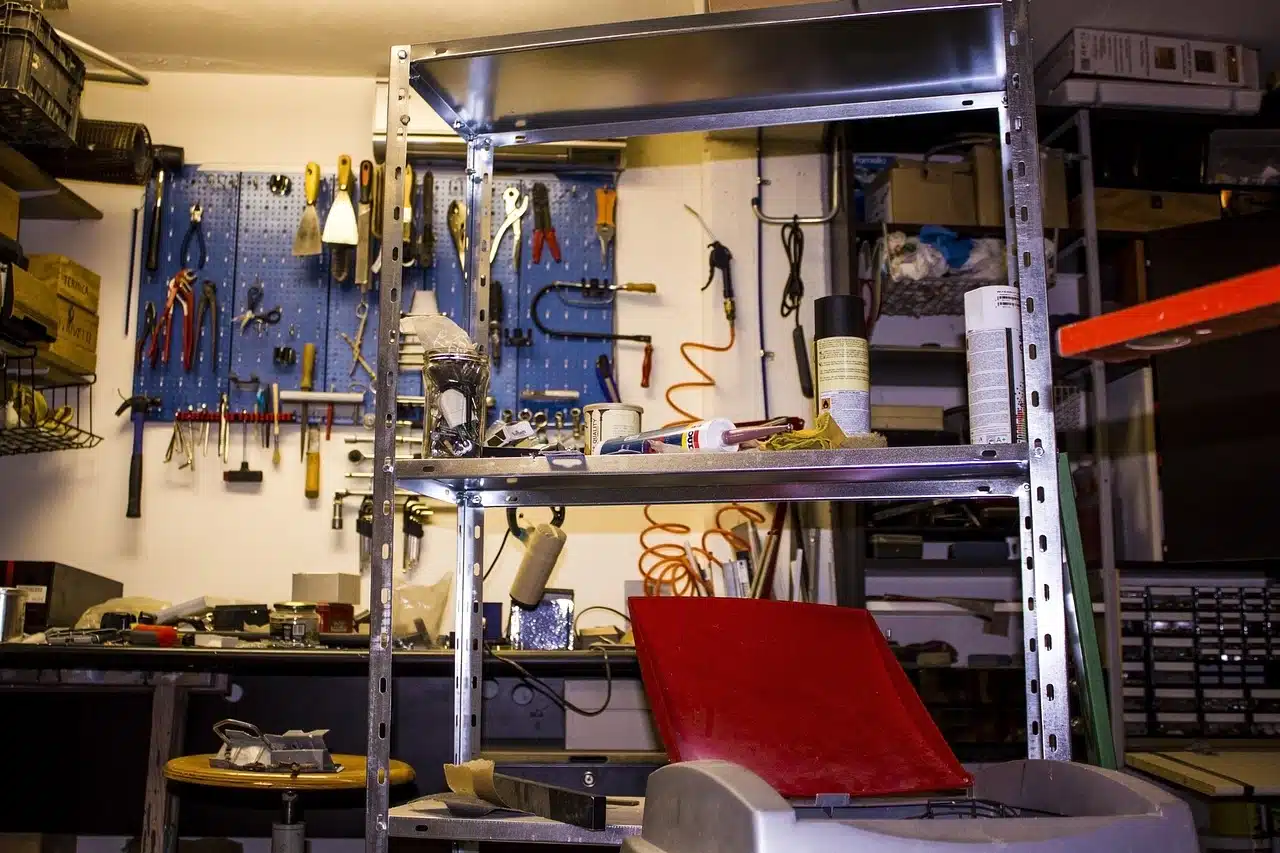
- business equipment (e.g. office furniture such as desks and office chairs; hall equipment such as workbenches and shelves; tools such as drills, hammers or files)
- digital equipment (e.g. smartphones, laptops, tablets, hardware and software)
Intangible operating resources in the trades, on the other hand, are not physical. We cannot get hold of them. This applies to:
- patents
- licences
- concessions
- property rights
- company know-how and values
Since only tangible operating resources in the trades matter for our purposes, we take a closer look at them. Which types do we distinguish?
Fixed electrical equipment – the steadfast ones
With fixed equipment the name says it all: these items do not move. They have their fixed place, which they cannot easily leave. One reason for their immobility is weight. They are usually so large and heavy that they can hardly be moved. Or, by their very nature, they are permanently installed because they are always used in the same place. So they prefer to stay in one location. But which work equipment belongs to this steadfast category? For example:
- lamps
- motors
- contactors
Portable electrical equipment – the mobile ones
Portable equipment is the exact opposite of fixed equipment. Flexibility is its great strength. It is not tied to a specific location, so it can move all the more freely. Wherever it is needed, it is used. This applies especially to easily movable items weighing less than 23 kilograms, for example:
- office supplies: computers, printers, desk lamps, mobile pedestals
- power tools such as drills, milling machines, jigsaws
- classic household appliances: coffee makers, vacuum cleaners, microwaves
- vehicles such as loaders, vans, forklifts
- new media: laptop, smartphone, tablet
Stationary electrical installations
Electrical installations and machines that are firmly anchored to their surroundings are called stationary installations by tradespeople. Installations in buildings are an example. They only fulfil their function in connection with the building.
Non-stationary electrical installations
Non-stationary installations and machines are not permanently integrated into their surroundings. Quite the opposite: they are dismantled again immediately after use, and a new destination is already waiting for them. This applies in particular to installations on assembly and construction sites.
Electrical equipment testing – test instead of taking risks
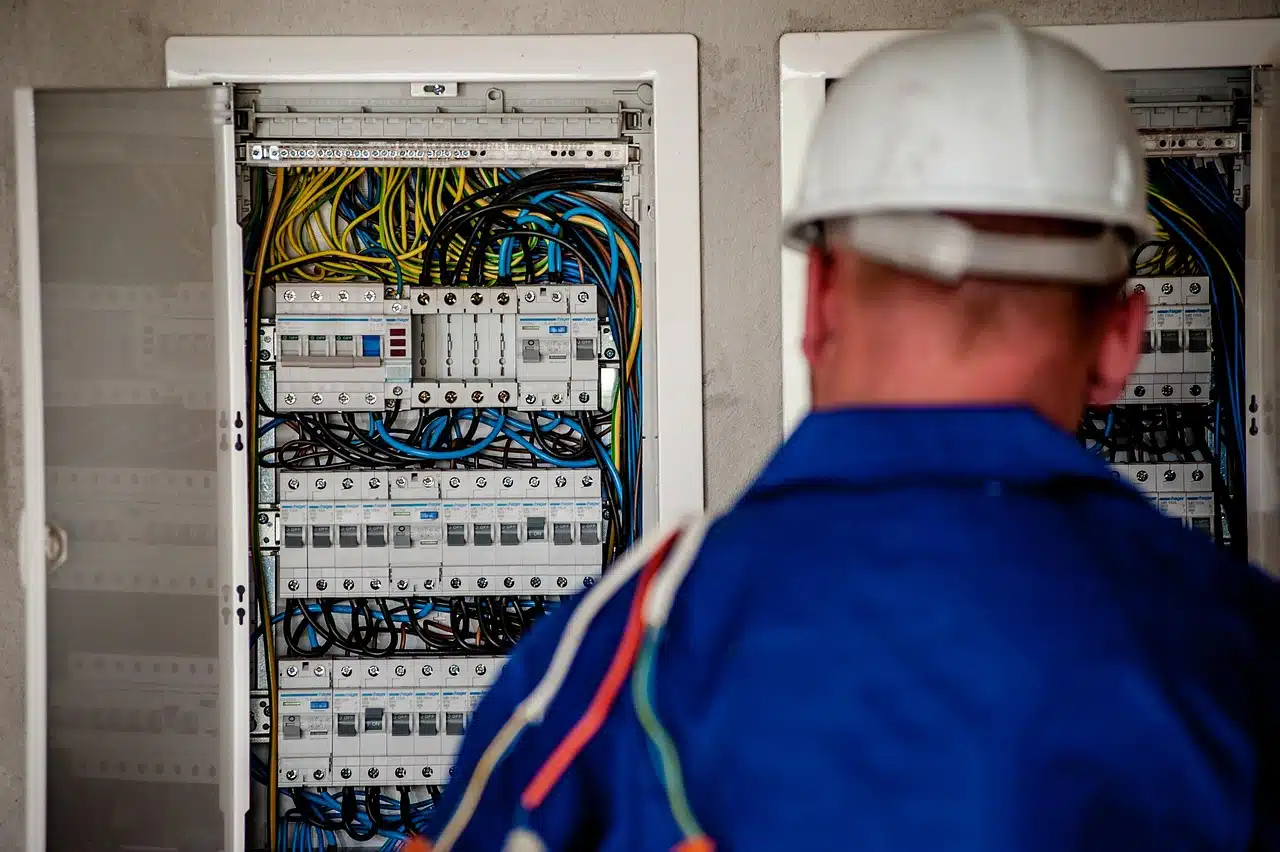
According to the DGUV (German Social Accident Insurance), electrical operating resources in the trades such as tools, vehicles and machines must be tested thoroughly on a regular basis. Because only safe work equipment is good work equipment. Both companies and public institutions such as schools or kindergartens must have the safety of their tangible assets certified.
When does equipment testing take place?
Inspection dates are not left to chance. The safety check always takes place when:
- electrical installations or tools are put into operation for the first time.
- changes are made.
In addition, there are regular inspection dates. The installations, vehicles and power tools have to prove themselves at fixed intervals. However, not everyone may carry out equipment testing. Only trained qualified electricians are able to do so. Electrically instructed persons have an exemption: they may carry out checks under the supervision of an experienced qualified electrician.
What are operating resources according to funding bodies?
Funding bodies have their very own idea of operating resources. According to the definition of the German development bank KfW, everything that is indispensable for the ongoing operation of a company falls into the category of working capital. This also includes all ongoing operating costs in the trades, such as:
- wages and salaries of employees and cooperation partners
- rent for offices and production premises
- deposits for offices and production premises
- costs for marketing, PR and advertising
- costs for further training such as courses, workshops and congresses
- costs for consumables such as printer cartridges, paper and ink
All other purchases that count as operating resources in the trades in the classic sense are regarded by funding bodies as investments. This applies to machines, tools, buildings, land and vehicles, but also to intangible assets such as patents, licences and definitions.
What are working capital loans for in the trades?
Whether for the vehicle fleet, expensive machines or new software and hardware – necessary purchases can cost a small fortune. And some companies cannot pay this small fortune out of their own pocket. But they don’t have to. This is exactly where the working capital loan comes in.
With a working capital loan, entrepreneurs secure a financial advance for their day-to-day business. They obtain the funds either from their bank or from a development bank. Another alternative: for short-term working capital loans, many businesses also turn to another company. Companies themselves often offer working capital loans.
This is how working capital loans are used in the trades:
- The bank allows the entrepreneur to overdraw the business account for a short time.
- When buying machines or vehicles, the company receives a short-term loan.
- The working capital loan supports a new project in the trades.
The problem with accounting
According to Section 266 of the German Commercial Code (HGB), operating resources are part of a company’s fixed assets. Here again a distinction must be made between intangible and tangible items. Tangible items belong to the company’s property, plant and equipment.
Good to know: if the business created the work equipment itself, it has no place in the balance sheet.
All other work equipment must be fully depreciated down to a value of 0.00 euros. But there is an exception: defective equipment that can no longer perform its daily duties satisfactorily is excluded from this rule.
Is digital equipment management worth it?
10 company vehicles, 3 plots of land, 5 production halls and loads of tools – who is supposed to keep track of all that? Craftcloud’s digital equipment management does.
The software does not just keep an eye on one vehicle or one toolbox. It sees the big picture. How much longer will the battery of the electric drill last? What towing capacity is allowed? When does the warranty of the hammer drill expire? And what was that about the lifting platform again? From now on, it is not the tradesperson but the software for the trades that racks its brains. That leaves time for the really important things in the trades – good, honest work.
Digital equipment management in the trades – independent of time and place
In the past, if you had left the operating manual at head office, the big drama began. Where should you note the defects and inspection dates in the meantime? In your head? It was worth a try. But memories did not always survive the journey back. Fortunately, those days are over: modern technology has also arrived in equipment management in the trades – software with a cloud function makes everyday work in the trades considerably easier.
All you need to access the software is access to the cloud and a working device. Everything is possible, from a smartphone and tablet to a PC. And then it’s time for you too: remembering was yesterday, recording is today.
Do you have any further questions? Feel free to contact us or book a free demo appointment! We will be happy to give you an insight into Craftcloud’s equipment management or the CRM module.